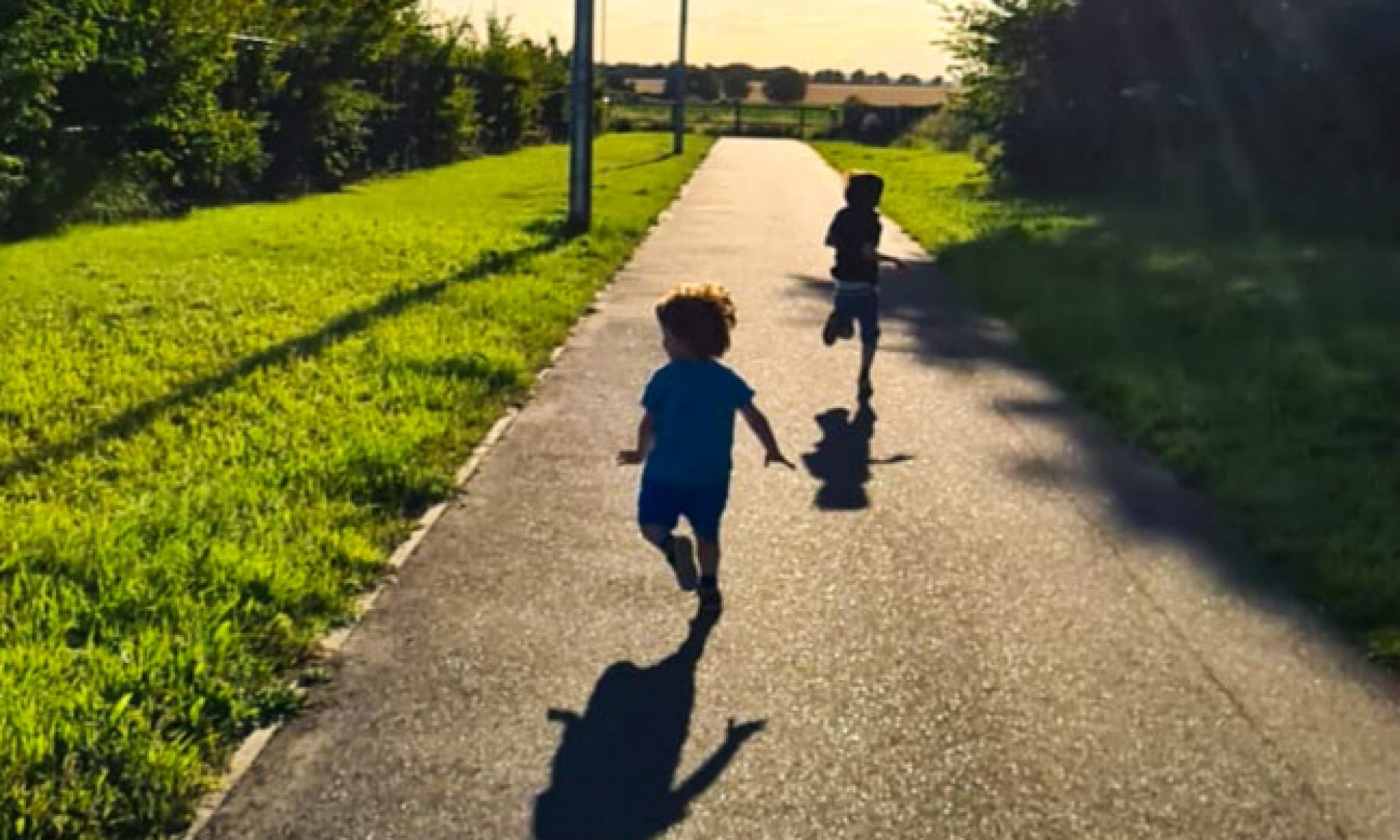
And then there were two

World Autism Awareness Week started this week. This condition is well and truly present in our lives. It has not been the end of the world, nor a curse. It has certainly made things a little more challenging, but it has made us see life differently.

Around 3 years ago, our eldest son was diagnosed with Autism Spectrum Disorder (ASD). It is called a spectrum because the level and variation in behaviours, abilities and difficulties can change from person to person.

We knew there was something about him unlike other children, and when it was first hinted that he may be on the spectrum, we processed it and started reading more about it to try to understand what the condition meant. We agreed that it was very likely that he was.

A diagnosis helped us understand more about it, about how it affected our child and also a chance to make sure he receives the right kind of support at school. At the end of the day, you want to do what’s best for your child so that he is happy, safe and accessing the education he deserves and support from specialists.

Now, it’s been two months since we received an ASD diagnosis for the second time. It turns out our second son, Lucas, is also autistic. Nothing new there or unexpected. We knew the chances of him being on the spectrum as well were high, because his older brother had the condition. We talked about it and agreed the chance was there. Obviously, you don’t assume it would be the case, but the possibility was there in the back of our minds.

Lucas has always been such a happy little soul. He was a happy and content baby, everything was a breeze with him. He is the epitome of joy, he has the biggest smile all the time. His happiness and excitement are contagious, he makes people smile wherever he goes. That’s precious.

What made us go back to the possibility of him being on the spectrum was that, around the time he turned 2, he was showing a speech delay. There weren’t any other issues that made us wonder, though. Many of the things we saw in Antony at that age were not in Lucas (Apart from the speech delay that Antony also had and now he is a chatterbox who is never quiet hehe) Lucas always had good eye contact and liked playing with us. However, every autistic child is different. We knew he had a speech delay, but it didn’t necessarily mean being on the spectrum.

After he turned 3, however, he started developing certain repetitive and sensory behaviours we knew too well: Alphabet and number love, non-stop jumping, flapping when excited, lining things up, echolalia, he would hold his little face with both hands and sort of squeeze it, and he would grab our hands to do that to him. After that, we were basically sure he was also on the spectrum, and the paediatrician agreed.

This time around, we live in a different part of the country than when Antony had his diagnosis. We have had support from the community speech and language therapist since we started the process of getting him assessed. Thanks to a drop-in clinic service they have, I took Lucas shortly after his second birthday, and the therapist has been involved in his progress and diagnosis. Given that we were in the middle of a pandemic, any appointment was held virtually, and she helped us with strategies and resources to help Lucas with his speech. For example, she encouraged the use of alternative means of communication through symbols and visual aids. She guided us on how to create a communication board where Lucas could tell us what he wanted to eat, to play or to watch on TV. He quickly got the idea and soon enough he was asking ‘Quiero …..’ or ‘I want….’. He can ask for the things he wants now very well. He would use his board sometimes, but a lot of the time he manages to ask or say things by himself. Of course he needs some time to process the information, but he gets there. It also helps to visualize daily routines.

Despite his communication difficulties, Lucas has been identified as hyperlexic, which means he can read far beyond what is expected for his age. Of course he may not always understand what he reads; he would spend long periods of time reading the credits at the end of a film and there are some very technical words there! He spends a lot of time reading books by himself, but he would still bring books to us to read to him. He is doing so well, and I am sure his communication skills will blossom now that he started preschool.

We are lucky to have two extremely bright little boys. Their development hasn’t been like that of a neurotypical child. Both of them have behaviours or habits that many neurotypical children their age have stopped doing. However, in their case, some aspects of their development is ahead of children their age. Antony’s math skills are amazing and well beyond a 7 year old, and Lucas can read and has been counting to 100 for a while already and is now trying to count in 2s. Both have extremely good memories. Antony loves geography, too. He can tell you about capitals, flags and completely random railway station information.

We are still using two languages at home. However, I would sometimes use English with them, especially Antony, as he struggles to communicate in Spanish at times – it is a difficult language!- when he is anxious or upset. I know they say you should stick to using your mother tongue when raising bilingual children, but I simply cannot make things more difficult for him in a moment like that. It isn’t any kind of crazy spanglish, I make sure of that! They still use Spanish with me most of the time, though, and I am happy and proud they do. ‘Why don’t you quit speaking Spanish?’ you might think….I can’t. It is part of them now and our home, I want them to be proud of their heritage. Even if their bilingual skills never get to be very fluent, they will know enough to make themselves understood.

They make our lives full of joy, fun, worry and sleep deprivation. They have different personalities, of course, but both are energetic, clever, happy, sweet and funny. They tend to sleep through the night, but often Lucas would wake up in the middle of the night and start singing the ABC song very loudly or reciting a book and that would wake Antony, or Antony would wake up and get noisy, and so Lucas ends up waking up…such fun! Lucas has a lot in his head at the moment, so sometimes it takes him a while to “switch off” and fall asleep, too.

You never plan to have a child with special needs, let alone two, but you are grateful for the children you are given and embrace the opportunity of raising them up and also learning from them along the way. Raising children is not easy I know, but raising children with special needs has extra challenges that sometimes people can’t quite understand. Sometimes people don’t realise how hard and frustrating it is seeing your autistic child struggling to communicate, to understand you or the world around, or gets defiant, or finds it hard to deal with his emotions, or when he gets anxious because his routine is broken or because they can’t control the weather, the train being late or any subtle change. We try to adapt our life to their needs but we are also trying to bring them up in a way that helps them learn to cope with whatever they struggle with. We don’t know what the future holds, that worries me. All I know is that I want them to be happy and proud of themselves, because we are so damn proud of them. We want them to be loved and cherished and valued.

If you managed to read this far, I thank you for taking the time. When I write about our children, their achievements and their struggles, it is not to have your pity or anything like that, because having children with special needs is nothing to be pitied for. My aim is for you to have an idea of what raising children on the spectrum is like, so you can help spread awareness and understanding. My children are only one example of this condition, though. This is our story. Other families may go through worse situations or less challenging than ours. Parenting children on the spectrum is like going hiking….with some tricky, dark, rocky and scary paths, but also with lots of joyous walks, with flowers of every colour under a blue sky.

Our lives on the spectrum


April has begun and it’s World Autism Awareness week/month. In fact it is celebrated specifically on 2nd April, but also all week and even throughout the month across the world.

About a year ago, our son was diagnosed with Autism Spectrum Disorder (ASD).

There is a lot of misunderstanding, misconception and lack of empathy about autism. Autism is a lifelong disability that affects communication, social interactionand behaviour. Yes, it is a disability. You can’t see it like other physical disabilities, but it’s there. There is no shame in having a child with a disability, it doesn’t make my son any less. Autism is not a superpower and it is not just doing things differently, but it isn’t a disease, nor a curse nor the end of the world. My son has many strengths, but the challenges he has faced and his daily struggles are significant and it is heartbreaking. People fear the unknown, what they don’t understand, so perhaps if I talk openly about our experience raising an autistic child, I might be lucky enough to spread more understanding and acceptance to anyone who wants to read with an open mind and an open heart to learn.

Autism changed ourselves as parents in many ways. For us, it changed what we thought being a parent meant. You see, when you are expecting your first baby, you have an idea of what parenthood would be like. We never meant to know it all or to be perfect parents because there is no such thing, but you dream of their first word, their eyes looking into yours expecting praise and smiles. You picture this little person wanting to play with you, who wants your comfort when they feel sad and need your guidance. That didn’t happen in the first years of Antony’s life. His speech has blossomed in the last couple of years, though, but it’s not at the same level of a child his age. We were overjoyed when he started making animal sounds and putting two or three words together, even if that was much later than the average kid. I do understand the saying “our eyes are the windows of our souls” very well now because when he looks into our eyes, we feel closer to his pure little soul.

Those who know him can tell you he is very loving, clever, funny, full of energy…his cuddles are a bit of an extreme sport! He likes everything in big sizes: kisses, cuddles and mouthfuls of food! He can read pretty much what you put in front of him, but he doesn’t always understand what he has read. His communication has improved greatly in both languages. His fluency is better in English and that is to be expected as he is immersed in an English speaking environment all day at school. For someone who struggles with communication I think he is doing brilliantly being bilingual and I am so proud of him, because he makes a great effort to make himself understood. Numbers are still his thing: he knows his times tables, he is constantly doing math operations. I think it is safe to say numbers are his happy place.

However, autism has made us face some very challenging moments, too. Antony has no sense of danger and that means he needs constant supervision both indoors and outdoors. Hence the helmet he wears…safety first! He gets frustrated when something doesn’t go the way he wants, when his routine has an unexpected change and that struggle with communication and understanding is what makes him throw himself to the floor, or bang his head on the floor or with his hand. It breaks me. As a parent, you don’t want to see your child getting hurt. When he started with this episodes, my first instinct was to stop him from doing harm to himself, but I have learnt that it is best to let him do that, because otherwise the meltdown is not a pretty sight.
At the moment, he is going through a defiant stage against authority. He wants to be in control of what he does, and if he can’t (I mean, let’s face it: he is a child, children can’t have full control of their lives) it causes him great anxiety and frustration. He doesn’t understand cause and effect so it is really difficult to explain why things are like this or that or why you do this or don’t do that. It must be hard for him to try to understand the world sometimes, and it is frustrating when nothing we do helps.

No two children with ASD are the same, the strengths and struggles our son has are not the same as for other autistic children. This I have told you is only part of our experience They are all unique, just like the rest of us neurotypical individuals are. Our son enjoys life just like other children, he will face challenges that not all kids will have to, but all he needs is love, understanding and patience from us to help him along the way. It is hard! I ain’t gonna lie! But I can’t imagine our lives without him. We have developed levels of patience I never knew possible, and there is room for lots more! We love his sense of humour, his dancing and his lovely personality.

I just pray to God for more buckets of patience…a never ending supply if possible! Oh, and energy because we need it to keep up with him! We love our little boy more than anything. I hope one day he’ll be able to read this and realise how proud and lucky we have always been to have him, and that we love him unconditionally, in good and bad times.

D-day

This is my lovely boy, the apple of my eye, my first baby. He filled me with great joy when he was born…he made me a mum, and that has been a big title…a huge one! Not just because it is my role as a mum to teach him a bunch of life lessons, but because it has been me who has had to learn even more to be able to bring him up the way he deserves. There have been many kinds of tears along the way: tears of joy, excitement, frustration, fear, love, lack of understanding, pride…tears of not knowing how to react, what to do, how to help…tears of feeling helpless.

It was a very important day yesterday for our family because we have finally been given his ASD (Autism Spectrum Disorder) diagnosis. Autism is not an illness nor bad parenting, it is not caused by vaccines and dedinitely not something I or we have or haven’t done. Autism is a condition which means Antony does and feels things differently to other children. He struggles with communication and expressing what he is feeling, for example if he has a tummy ache or a headache or if he’s just feeling a bit sad. Imagine the impotence of seeing your child complaining because he is in pain but you can’t do anything because, poor little thing, he can’t explain what he’s feeling or where it hurts or the frustration of seeing your child crying and agitated because he can’t explain this or that and doesn’t fully understand reasoning…it’s heartbreaking!

It’s been a few years of difficult times trying to make your little voice come to light, seeing little words, phrases and sentences flourish little by little. His speech is still very tender, and yet he is bilingual…he understands his mami and daddy, it’s amazing how he knows which language to speak according to who he is talking to. It amazes me when I hear him reading and count to 1000 and beyond non-stop. I love his brilliant memory and the happiness he radiates day to day…and those massive cuddles he gives!

I love him more than life itself! I love how clever he is, his joy and his energy…oh how I wish I had at least half that energy! I love him with his obssessions and repetitive behaviours. I pray to God for wisdom, patience and strength (because there are days where tiredness takes its toll!) so that his dad and I can bring him up and guide him throughout his life. I love you, my dear son…sweet boy of my heart! I celebrate who you are and I hope the world can get to see the purity of your soul.

Being bilingual and other fears.

When Antony started nursery earlier this year, a part of me was gearing up for a possible talk from his teacher, simply because I knew my child, I knew the whirlwind he is and I have always known he wasn’t your everyday child. I have always thought he was different…special!

When we were told he might be on the spectrum, I crumbled, though. A bunch of uncertainties and insecurities grew on me. I hated to think ‘I knew something was up’ and wondering whether I should have done something earlier. I started blaming myself, trying to think what I may or may not have done that caused him to be what he was. Had our parenting been poor? Had I done something during my pregnancy that caused him harm? Had I been a bad mum? Why was this happening? Why was this happening to our first born? I wanted to pinpoint the cause of our dilemma so badly.

Since that talk we had at school, our journey for a diagnosis began. I have lost count of the many questions we’ve been asked regarding our son’s behaviour. When we have to explain and go through his array of peculiarities, I can easily point the time and day he did something astonishing or when he had a bad meltdown. I feel my brain is turning into a catalogue where you can find things that trigger meltdowns, methods for coping with X or Y situations, things he likes and dislikes and of course…everything about his ‘Antonysm’, that’s how I call his little world.

Personally, dealing with his speech and communication issues has been one of the toughest experiences I have dealt with in my life. Because of my background in linguistics and keen interest in language acquisition in children, it had always been very important to me to play an active role in the development of my offspring’s speech and communication. I hail from the warm and humid tropics of Central America and so, as a native Spanish speaker, it was also crucial to pass on my mother tongue. Therefore, we decided to bring any children we would have bilingual.

Slowly but surely, we saw little words coming from his mouth in one language then the other language’s would appear soon after. But then, one day, we felt his speech was not developing as fast as other children his age, and there was the ‘he is bilingual, maybe his speech is delayed because of that’ kinda thought. I kept having that nagging feeling that there was more to it than his bilingualism.

I even fell into dark places of not trusting the way I have been bringing him up, where I wondered if being bilingual caused him any delays and I hate myself for falling into that trap, because, deep inside, I don’t think being bilingual is causing him any detriment.
Research on bilingualism in autistic children is scarce; experts haven’t found whether being bilingual is harmful for children with autism. I have been given advice from well meaning people in the past, telling me that perhaps it may be better to speak to Antony only in English, but my gut tells me that I ought to stick to what I have been doing since he was in utero – talk to him in my native language- simply because that is what comes naturally to me.

Antony amazes us. Every time he learns a new word in one language, its counterpart comes soon after and he gets it!
For example, if he wants an apple and he asks me in English, he immediately corrects himself, without being prompted, and goes for ‘manzana’ and it happens the other way round, too. He knows which language to use for the people in his life.

When I was expecting Antony, I looked forward to his first words and little sentences, I looked forward to his first curious questions and those ‘But why?’ moments. And then, as months went by, a delay in his communication skills became more and more apparent, and I became more concerned, wondering what I was doing wrong, why my little boy wasn’t saying yes or no, why it wasn’t until he was reaching his second birthday that he started calling us ‘Mami’ and ‘Daddy’.
I am no speech therapist, but there are moments I wish I was…the moments where I see how frustrated he gets when he can’t let us know what he needs/wants, when his efforts to speak end up in an agitated babbling that turns into meltdown and/or tearful screams. I often struggle to hold back the tears…and fail.

Even though I have got over that initial “shock” of the news, I can’t help but feel worried about the future:
• I wonder how Antony will cope with education and learning…I know he has great potential because I know he is very bright.

•I wonder if he will be able to pursue a career. I keep thinking whether he will get to go to university and study something he loves.

• I wonder whether he’ll be able to find a job that fulfills him and gives him a sense of achievement. I want him to realise he can be useful to society and feel proud of himself for doing so.

• I wonder if he will make friends along the way, if he’ll find people who cherish him and enjoy his company.

•I wonder whether he’ll fall in love, if he’ll find someone who will love him for who he is, with the good and the bad times. I hope he will find true love.

We may go through tough days with him, but we also have some pretty amazing days with him where he surprises us. We can’t stop and complain about our situation. What we have to do is support him along the way, be there for him and give him our unconditional love and patience. My son is a pure soul and I want everyone to know it!